What to Look for in a Real Estate Brokerage Before You Sign
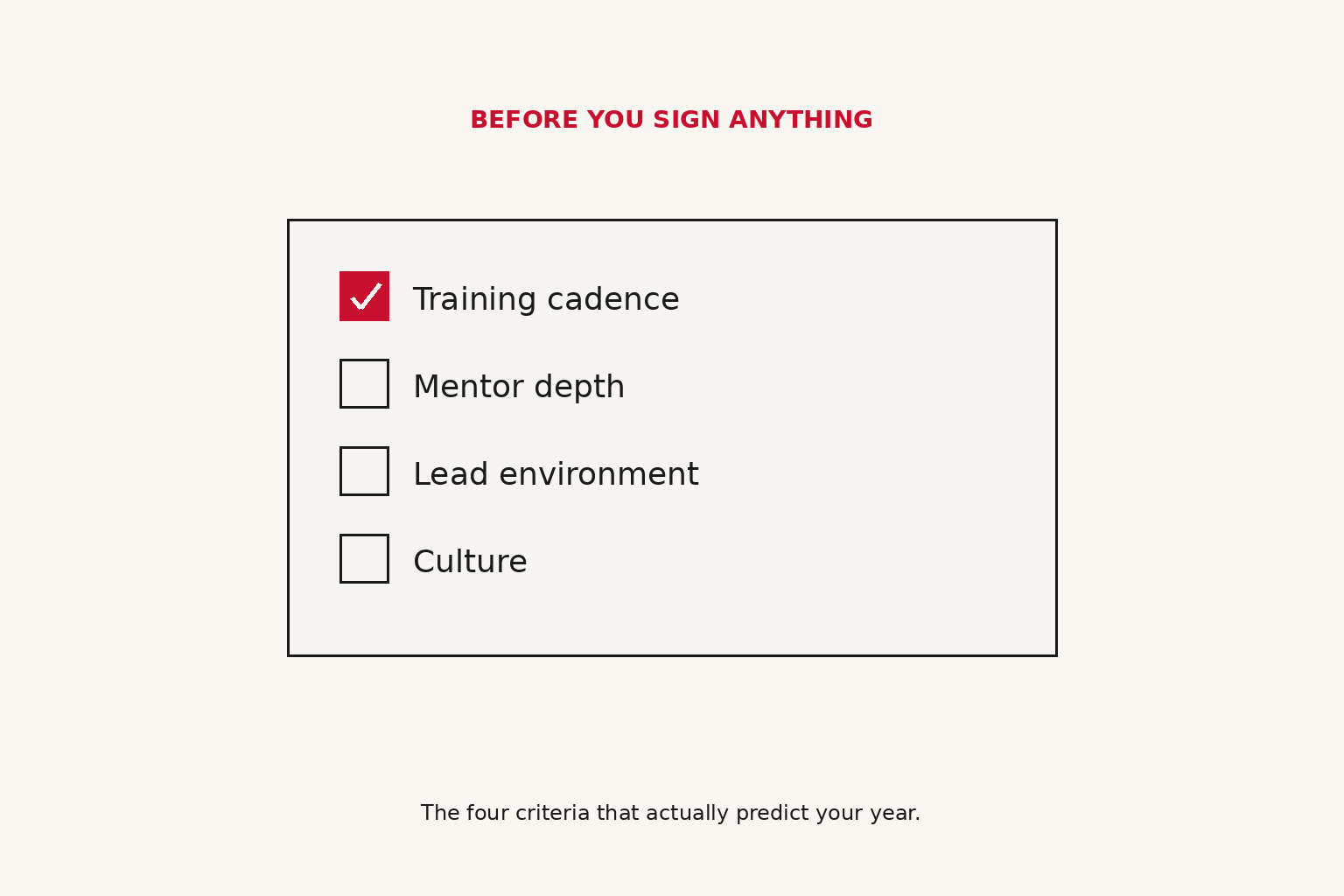
Short answer: Five things matter most when evaluating a brokerage — commission structure, training quality, brand recognition, culture fit, and what technology and leads actually come with the deal. Most brokerages lead with the first one and hope you don’t dig into the others. Here’s what to ask, and why the answers matter more than the split percentage.
Why the split conversation is a distraction
When agents shop brokerages, the first question is almost always “what’s the split?” It’s the wrong first question — but it’s the one brokerages expect, so they’ve gotten very good at making their number sound like the best number.
A brokerage offering 90% sounds better than one offering 70%. But if the 90% brokerage has a $25,000 annual desk fee, no training, and no brand recognition in your market, the math inverts fast. The agent taking 70% with a $16,000 cap at a highly recognized brand — who hits cap in the first half of the year and earns 100% on everything after — frequently takes home more money than the “high split” agent at a discount shop.
Use the Agent Economics calculator to run side-by-side comparisons on actual brokerage models before any conversation gets serious. Numbers on a page cut through the pitch.
1. Commission structure: total annual cost, not just the split
Ask for the total cost to you in a year at your current or projected production level. Include: the split percentage, the annual cap (if any), transaction fees per close, monthly desk or technology fees, errors and omissions insurance, franchise fees, and royalty fees. A brokerage that charges 30% but has no cap will cost a high producer significantly more than one with a cap of $16,000–$19,000.
Also ask what happens after cap. At KW Portland Central, once you’ve paid your annual cap, every deal for the rest of your anniversary year is 100% to you. Some brokerages reset quarterly. Some never give you 100%. Know exactly what the ceiling looks like.
2. Training: what exists, and who’s actually teaching it
Every brokerage says it has great training. Ask for specifics: How many training events per month? Who runs them — a dedicated coach, a guest speaker, or whoever had time that week? Is there a structured onboarding program for new agents, or a structured growth track for established ones? What does the training cost — is it included or does it carry an additional fee?
For new agents especially, training infrastructure is the difference between building a career and spinning wheels for two years. The most expensive thing you can do is join a brokerage that leaves you to figure it out alone while charging you monthly regardless of production.
At KW Portland Central, our training calendar runs weekly with a combination of skill-building sessions, market update calls, and accountability-based coaching — plus full access to KW University, one of the most extensive agent education platforms in the industry.
3. Brand: what it actually opens in your market
Brand recognition matters most when you’re new or when you’re farming an area. A consumer who doesn’t know you personally needs to trust someone. “I’m with Keller Williams” carries weight in Portland Metro that a newer or regional brand doesn’t. That recognition affects conversion rates on cold calls, open house sign-ins, and listing appointments.
The counterpoint: if you already have a deep referral network and every client comes from personal relationships, brand recognition matters less. Be honest about where your business actually comes from — and where you want it to come from as you scale.
4. Culture: what does the office actually feel like day to day
Ask to sit in on a training session before you join. Not a recruiting pitch — an actual training. Watch whether agents participate or disappear. Notice whether leadership is accessible or whether you’d be dealing with a transaction coordinator and an 800 number. Ask agents at the office — not ones handpicked by the recruiter — what the culture is actually like.
This matters more than most agents give it credit for. Real estate is isolating by nature. The office you join should make you feel accountable, supported, and like you’re surrounded by people who want you to win — not people who are indifferent to whether you do 2 deals or 20.
5. Technology and leads: what’s actually included
Ask specifically: what CRM is included and what does it cost outside this brokerage? What lead generation tools are part of the package and what do they actually deliver in your market? Is there a lead referral program, and what are the terms when a lead converts?
Many brokerages advertise “leads included” — but the leads are shared across 50 agents, or they’re internet registrations with a 2% conversion rate, or they require an additional referral fee at closing. Know exactly what you’re getting before you count on it to build your business.
Questions to bring to every brokerage conversation
Beyond the five categories above, here are the questions most agents forget to ask: What is the average annual production of an agent in this office? What percentage of agents who join in year one are still here in year three? What happens to my listings and clients if I leave? Is there a desk fee if I’m not producing?
The answers to those last questions reveal how a brokerage actually thinks about its relationship with agents — whether they see you as a partner or a revenue unit.
Have the conversation with your numbers in hand
The best brokerage conversations happen when you come in knowing your own production data and what you want to be earning in 12 months. If you’d like a candid, no-pressure conversation about how KW Portland Central compares on all five of these dimensions — and what the numbers actually look like for someone at your production level — request a confidential call with our team. We’ll run the math with you, not for you.
You can also check the FAQ page for answers to the most common questions agents ask before making a move.