How Much Do Real Estate Agents Make in Oregon? (2026 Real Numbers)
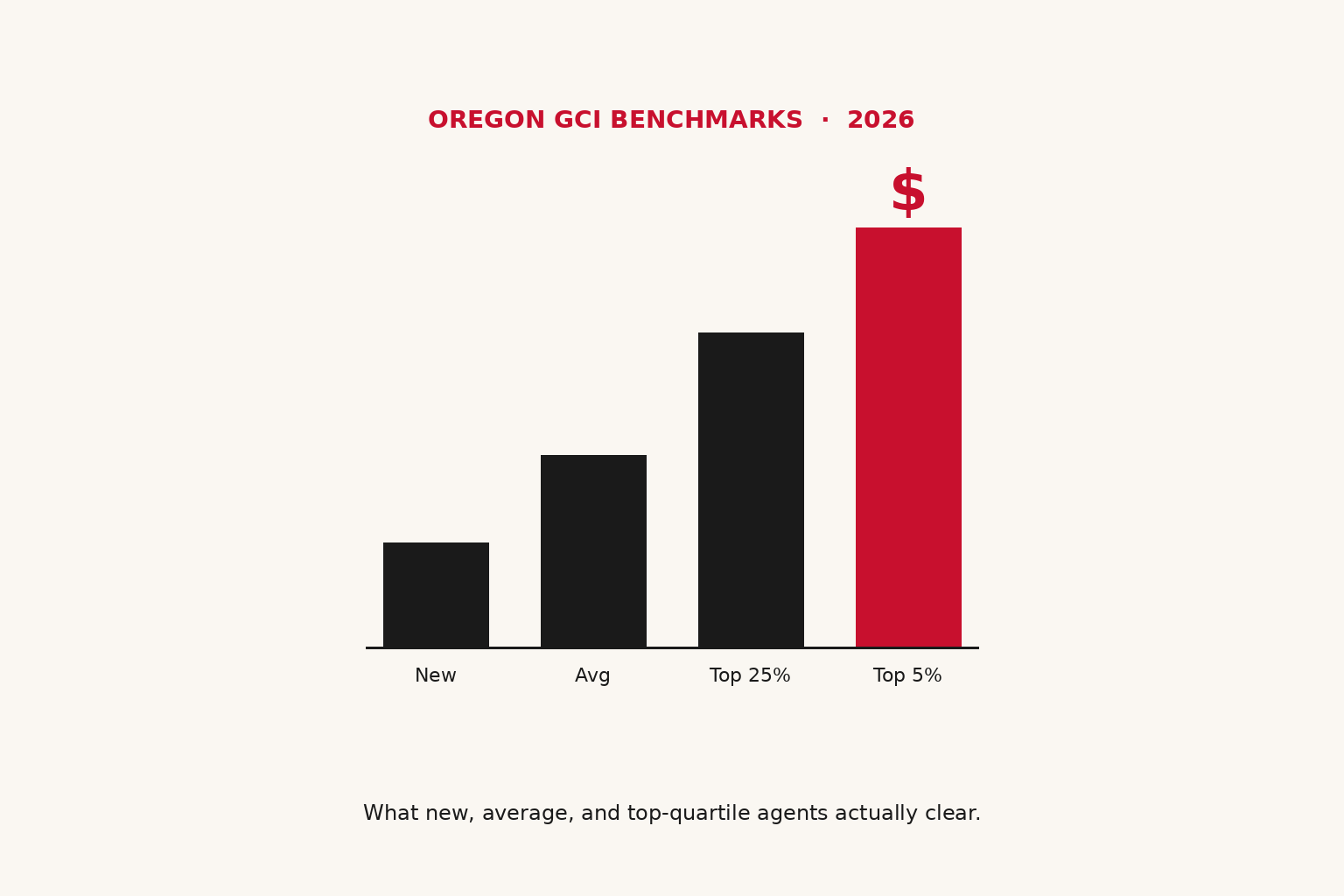
Short answer: The median Oregon real estate agent earns between $45,000 and $65,000 in gross commission income per year — but that number hides a wide range. First-year agents often earn $20,000–$35,000. Established producers in the Portland Metro regularly earn $100,000–$250,000+. The three biggest levers: your brokerage model, your production level, and how you run your business. Use the Agent Economics calculator to model your specific situation.
The honest truth about “average” agent income
When you search for real estate agent salaries, you’ll find numbers ranging from $48,000 to $112,000 depending on the source. The spread is real — and it’s not because the data is wrong. It’s because real estate income works differently than a W-2 job.
Most income surveys include agents who worked just one or two transactions all year. Pull those out and the numbers look very different. At KW Portland Central, our active agents averaged around $100,000 in gross commission income in 2025 across 1,457 transactions on $772M in volume. That’s not cherry-picking — it’s what consistent, full-time production looks like in this market.
Gross commission income vs. what you actually keep
The income numbers you see advertised are almost always gross commission income (GCI) — the total commission generated before your split with the brokerage and before expenses. Here’s the math most people don’t show you:
On a $500,000 home with a 2.5% buyer-side commission, the gross commission is $12,500. If you’re on a 70/30 split with a $16,000 annual cap, your brokerage keeps $3,750 of that deal — but once you hit cap, you keep 100% of every subsequent commission for the rest of your anniversary year. An agent doing 20 deals a year at that price point generates $250,000 in GCI. After a $19,000 annual cost at KW Portland Central, they take home approximately $231,000.
The brokerage you choose changes this math significantly. Some brokerages charge no cap but take 30–50% of every deal indefinitely. Others have high desk fees regardless of production. Run your own numbers at the Agent Economics calculator — it compares KW Portland Central against eXp, Compass, RE/MAX, REAL Broker, and John L. Scott side-by-side.
What separates $50K agents from $200K agents in Oregon
It’s not luck, market timing, or having a big sphere of influence when you start. The agents I coach through Keller Williams MAPS Coaching who break into six figures consistently share three habits:
They treat lead generation like a job, not a hope. Top producers have a daily non-negotiable — a specific number of conversations, calls, or contacts — regardless of whether they have open escrows. The agents earning $50K are usually waiting for referrals. The agents earning $200K are creating them.
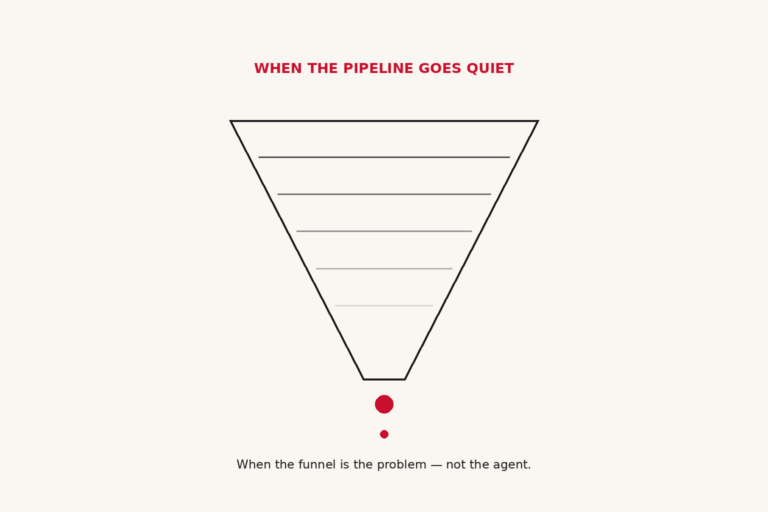
They know their numbers. Average sale price, average commission rate, average days to close, conversion rates at each stage of the funnel. You can’t manage what you don’t measure. If you don’t know your cost per lead or your conversion rate from contact to contract, you’re flying blind.
They chose the right brokerage for their stage. A new agent needs training, accountability, and a proven system more than they need a high split. An established agent hitting cap in Q1 needs a brokerage that rewards production with 100% income for the rest of the year. The right fit isn’t the same at year one as it is at year five.
Oregon-specific factors that affect your income
Oregon’s real estate market has some characteristics that directly affect agent earnings. Portland Metro — Multnomah, Washington, Clackamas, and Clark counties — accounts for the majority of transaction volume in the state. Median home prices in the $450,000–$600,000 range mean commission checks are meaningful even at standard rates.
Oregon also allows agents to be licensed in both Oregon and Washington, which opens the entire SW Washington market — Vancouver, Camas, Washougal, Battle Ground — without additional education requirements beyond the WA exam. For agents working the Portland Metro border area, a dual-state license can meaningfully expand your addressable market. We cover what Oregon agents need to know about working in SW Washington on the site.
Buyer representation agreements became standard practice in Oregon following the 2024 NAR settlement changes. Knowing how to present and negotiate your buyer-side compensation is now a core skill — and agents who master it early will have a significant edge as the market adjusts.
How to project your own income
The simplest model: pick a realistic average sale price for your target market, multiply by your commission rate, multiply by the number of transactions you can realistically close in a year, then subtract your brokerage costs.
Example: 15 transactions × $525,000 average price × 2.5% = $196,875 GCI. At KW Portland Central’s $19,000 annual cost structure, you’d take home approximately $177,875 — and that’s before you hit cap. Close those 15 deals after reaching cap and the number climbs closer to $190,000.
The Agent Economics calculator lets you adjust every variable — price, rate, GCI target — and shows you how each major brokerage model affects your take-home in real time. Worth five minutes before your next brokerage conversation.
Ready to talk specifics?
If you want to run your actual numbers — based on your market, your production history, and your goals — that’s exactly what a confidential call with our team is for. No pressure, no pitch. Just a real conversation about what the math looks like for you specifically.